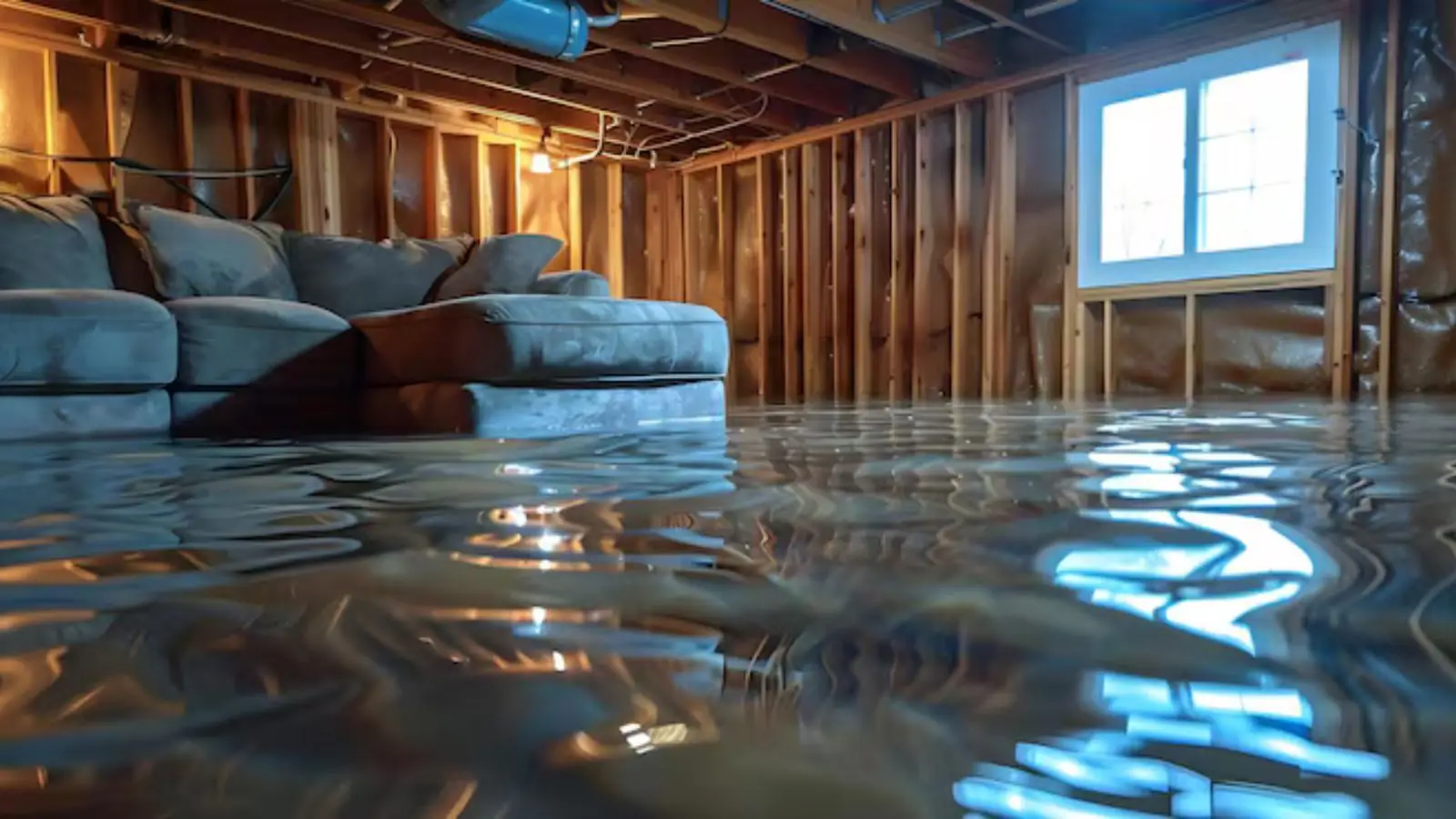
Fixing flood damage in a Hopkinton, MA home comes down to doing things in the right order. Make the building safe, document the water, remove what is contaminated, dry what can be saved, and only then rebuild.
Flood damage is water that enters from outside, such as rising groundwater, an overflowing stream or runoff pushing against a foundation, and it is treated as contaminated until proven otherwise. This guide follows the work from the first hour to the finished room, so you know what to do yourself and what to hand off.
Step one: make the house safe before anything else
Nothing in the house is worth a shock or a fall. If water is near outlets, the panel or appliances, stay out and have the power shut off from a dry location, or ask your utility. Never walk into a flooded basement with the electrical system live. Standing water can also hide broken steps, open drains and objects that have floated loose.
Assume the water carries germs. The Massachusetts home care guide for flooding and sewage back-ups tells people to wear gloves, eye protection and boots. Keep children and pets out of the area, and do not run a gas-powered pump or generator indoors, because carbon monoxide builds up fast in a closed house.
Safety checklist for the first hour
- Power off to wet areas, switched from a dry spot only
- Gloves, eye protection and waterproof boots on before entering
- Children, pets and anyone with breathing problems kept away
- No gas-powered equipment running indoors
- Gas smell or sparking means leave and call for help from outside
Step two: document before you discard
The Division of Insurance advises photographing the damage and the water height before cleanup begins. Take wide shots of each room, then close shots of walls, floors, appliances and belongings. A short walkthrough video helps too. Note the date and the time the water first appeared, and keep a running list of what you throw away.
Report the loss quickly. The state tells homeowners to report a claim immediately to their agent or company. Standard homeowners policies do not cover flood, so check your policy or ask your insurer which parts of your loss, if any, fall under a separate flood policy or an endorsement.
Step three: stop more water coming in
Fixing the house is pointless if water keeps entering. Move sandbags or temporary barriers to the low side if there is time, clear storm drains and downspouts near the foundation, and check that the sump pump is running if you have one. If water is rising through the floor or walls, removal is a holding action until the outside level drops.
Removing standing water too quickly can also hurt. When the ground outside is saturated, emptying a basement all at once can put uneven pressure on walls and floors. A professional crew checks the outside water level first and removes water in stages. Our flood damage restoration page explains how that staged work fits the whole job, and emergency water removal covers the pumping.
Step four: sort what goes and what stays
Flood water is not clean, so the sorting rules are stricter than for a broken pipe. The MassDEP guide says to always discard food, medicines, mattresses, pillows, upholstered furniture, carpet padding and cardboard. It says large carpets, books and paper are usually discarded too.
Hard, non-porous items such as glass, metal and sealed tile can usually be washed with detergent and then disinfected. The same guide gives a mix of one quarter cup of household bleach per gallon of water for disinfecting, and warns never to mix bleach with ammonia.
| Item | Usual outcome | Why |
|---|---|---|
| Carpet padding | Discard | Soaks up water and contamination |
| Mattresses and upholstery | Discard | Cannot be reliably cleaned |
| Drywall touched by flood water | Cut out | Porous, holds contamination and moisture |
| Solid wood furniture | Clean and dry | Often survives if sealed and dried |
| Glass, metal, sealed tile | Wash and disinfect | Non-porous surfaces |
| Paper, books, cardboard | Discard | Absorb water and cannot be sanitized |
Step five: dry the structure and measure
Drying is where most flood repairs are won or lost. State health guidance says wet areas should be completely dried in 24 hours, and the Housing Code expects areas affected by leaks or floods to be dried within 48 hours. After a real flood that clock is hard to beat, which is why speed matters.
Professional drying uses moisture meters to map wet areas, air movers to push moisture off surfaces and dehumidifiers to pull it from the air. Wet insulation and the lower part of wall cavities often have to be opened so they can dry. Our water mitigation page covers how drying is measured until the readings return to normal.
Step six: deal with mold risk early
The DPH guide says wet porous materials should be dried within 24 to 48 hours or mold growth is likely. It also says to discard contaminated wallboard, insulation and wood trim after a flood. Do not paint or caulk over anything that looks like mold.
The same guide notes that the state does not recommend routine mold testing as part of water damage cleanup. What matters is finding the moisture, removing wet materials and drying the space. If visible mold covers a large area, see our mold remediation page.
Flood zones and the wetlands around Hopkinton
The town's zoning bylaw sets up a Floodplain District covering special flood hazard areas on the Middlesex County flood maps, and the Conservation Administrator serves as Floodplain Administrator.
The Cedar Swamp ACEC, about 1,650 acres shared by Hopkinton and Westborough, is mostly wetland that stores floodwater for the Sudbury River basin. In practice, if your house sits near a brook, pond or wetland edge, ask the town whether the lot is in a mapped flood zone before you rebuild, because that can affect permits and future insurance.
Source type: Town zoning bylaw and mass.gov EEA/DCR
Step seven: rebuild once the readings say dry
Rebuilding comes last. Insulation, drywall, flooring, paint and trim go back only after moisture readings confirm the structure is dry. Our water damage repair page describes how repair decisions are made material by material.
Check the paperwork too. In Massachusetts, contractors on owner-occupied one to four unit homes must register under the Home Improvement Contractor program, and written contracts are required at $1,000 or more. Ask the town's Inspectional Services whether your rebuild needs a permit before work starts.
If you need help in the Westborough area or near Milford, our Westborough service area and Milford service area pages show how nearby towns are covered.
| Factor | How it changes the job |
|---|---|
| Water category | Flood water is contaminated, so more material comes out and more cleaning is needed. |
| Depth and area | Deeper water and more rooms raise removal and drying work. |
| Time wet | Longer wet periods mean more materials fail. |
| Basement finishes | Finished walls and floors add demolition and rebuild scope. |
| Rebuild level | Matching existing trim, paint and flooring takes longer. |
Flooded and not sure where to start?
Call (508) 446-9244 any hour. We explain the scope and the plan before work begins.
Frequently Asked Questions
Drying often takes several days, and rebuilding follows after the readings are normal. The total depends on how deep the water was, how long it sat and which materials were affected. A written scope should list each stage.
Small, shallow events with gloves and boots can be handled by a homeowner, following the state home care guide. Deep water, sewage, wet insulation or water that reached walls usually needs professional equipment and moisture readings.
Standard homeowners policies do not cover flood damage. Flood coverage needs a separate policy or limited endorsement. Check your policy or ask your insurer, and report the loss right away.
Drywall that flood water touched is usually cut out because it is porous and holds moisture and contamination. Measure first, because a moisture meter shows how far the damage reaches up the wall.
Yes. The town's zoning bylaw has a Floodplain District for mapped special flood hazard areas, and the Conservation Administrator is the Floodplain Administrator. Ask the town whether your address is mapped before you rebuild.