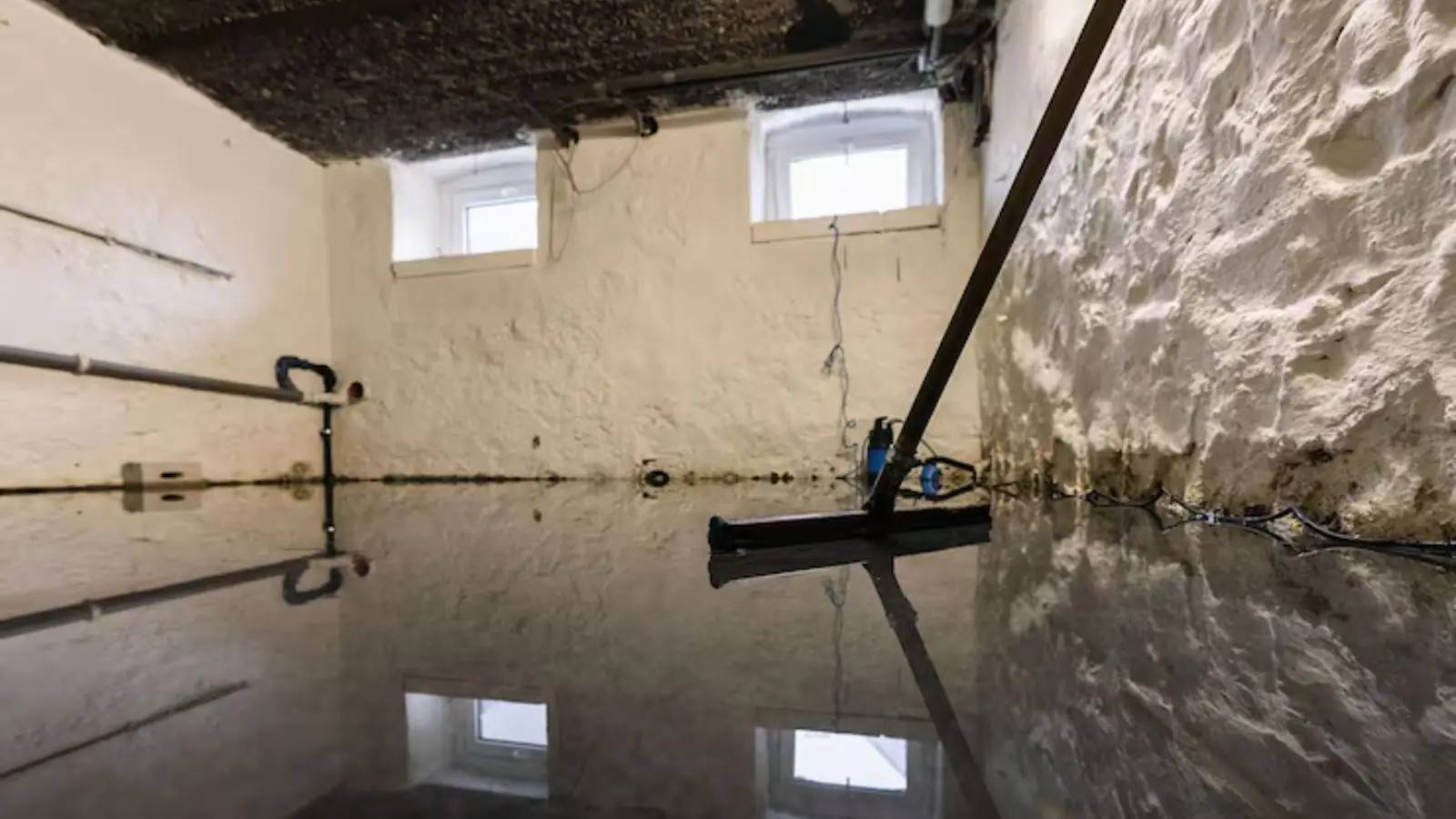
Flood damage restoration in Hopkinton, MA starts with safety. If water is rising or has reached outlets, the electrical panel or a furnace, do not wade in. Call the utility or 911 for any electrical or gas risk first, then call (508) 446-9244. The line is open 24/7, and same-day response is offered when crews are available.
While you wait, keep people and pets out of the water, lift valuables if it is safe, and photograph the water line. Flood water from outside or from a sewer line should be treated as contaminated until it has been removed and the area cleaned.
When standing water is an emergency
Standing water in a basement is an emergency whenever it covers electrical outlets, a furnace or water heater, or it is still rising. The same is true when it smells like sewage or has soil in it. The first hours decide how much needs to be removed and how much can be dried and saved.
Our emergency water removal service is the pumping stage, and flood restoration covers the cleanup, drying and sanitizing that follow.
Why water category matters
The industry standard for professional water damage work, ANSI/IICRC S500, sorts water into three categories. Clean water from a broken supply line is Category 1. Water with some contamination, such as from a washing machine drain, is Category 2. Water from sewage or from rivers, streams and flooded ground is Category 3.
| Category | Typical source | What usually happens |
|---|---|---|
| 1 | Broken supply line, tub overflow with clean water | Extraction and drying, with many materials saved |
| 2 | Washing machine or dishwasher discharge, sump overflow | Cleaning, drying and removal of porous materials |
| 3 | Sewage backup, flood water, rising groundwater | Protective gear, removal of porous materials, disinfection |
A clean leak can become Category 2 or 3 if it sits for a couple of days, because bacteria grow. That is another reason to call quickly.
Basement flooding cleanup
A flooded basement is the most common flood call in Hopkinton. After the water is pumped, a crew removes wet carpet, padding and drywall that cannot be saved, hauls out damaged contents and washes surfaces. The structure is then dried with air movers and dehumidifiers, and the area is disinfected.
Concrete floors and block walls hold moisture, so drying takes longer than the surface suggests. Finished basements with carpet, paneling and stored boxes lose the most. If you plan to finish a basement, ask the town about flood zones first and consider a sump pump with a battery backup.
After the area is clean and dry, rebuilding is a separate step handled through water damage repair. Do not start rebuilding until moisture readings show the walls are dry.
Sewage backup: what to do first
Sewage in a home is a health and safety job. Stay out, keep children and pets away, stop using water in the house and do not touch electrical equipment standing in water. Call the town's DPW if the backup could be in a public line, and call us for cleanup.
The state environmental agency's home care guide says to assume pathogens are present, to wear gloves, eyewear and boots, and to always discard food, medicines, mattresses, pillows, upholstered furniture and carpet padding that touched the water. Large carpets, books and paper are usually thrown out as well. Surfaces that stay are washed with detergent and then disinfected.
If you have a private well and the cap was underwater, the state says to treat the well as contaminated, use bottled water or boil it for five minutes, and test it through a certified lab. Do not flush chlorinated water into a septic system.
Flood exposure around Hopkinton
Hopkinton's zoning bylaw includes a Floodplain District for the National Flood Insurance Program that covers special flood hazard areas, and the town's Conservation Administrator is the Floodplain Administrator. The bylaw lists FEMA flood map panels for Middlesex County, so you can look up your address through the FEMA Flood Map Service Center and ask the town about it.
The Cedar Swamp area, about 1,650 acres, is described by the state as mostly wetland that stores floodwater for the Sudbury River basin, and Echo Lake in Hopkinton is the headwater of the Charles River segment that flows toward Milford. Federal disaster declarations in 2005 and 2010 each included Middlesex County for individual assistance, so heavy regional flooding is part of the area's history.
Insurance and flood coverage
The Division of Insurance says standard homeowners policies do not cover flood damage, and that flood coverage requires a separate policy, which usually takes 30 days to take effect. Sewer and drain backup is generally excluded unless you add an endorsement, and seepage through basement walls is not covered. Report any claim promptly, and ask your insurer what applies.
| Factor | How it changes the job |
|---|---|
| Water category | Category 3 water needs protective gear and more removal. |
| Affected area | A whole basement costs more than a utility corner. |
| Materials | Carpet and drywall come out, concrete is cleaned and dried. |
| Drying days | Block walls and slabs dry slowly. |
| Rebuild scope | Finished basements have more to replace. |
Want your real number for flood cleanup?
Call (508) 446-9244. The scope and price are explained before work starts.
After cleanup, a damp basement can develop mold, so read about mold remediation if materials stayed wet. For the drying stage itself, see water mitigation. Towns we reach from this base include Milford and Holliston.
Frequently Asked Questions
Yes. The line is open 24/7. Call, say where the water is and how deep it is, and we start arranging a crew. Same-day response is offered when crews are available, and no arrival time is promised.
Flood water and sewage can carry bacteria and other contaminants, so treat it as contaminated. Stay out, keep children and pets away, and avoid any electrical equipment in the water.
The state's home care guide says to discard food, medicines, mattresses, pillows, upholstered furniture and carpet padding that touched the water, and usually large carpets, books and paper. Ask a crew about the rest.
Often not. Standard homeowners policies do not cover flood damage, and sewer backup or sump pump failure usually need an endorsement. Check your policy or ask your insurer.
Look up your address on the FEMA Flood Map Service Center and ask the town's Conservation Administrator, who serves as Floodplain Administrator. Lenders often require flood insurance in mapped zones.