Water mitigation in Hopkinton, MA is time sensitive, so start by calling (508) 446-9244. The line is open 24/7, and same-day response is offered when crews are available. While you wait, shut off the source if you can, turn off power to wet areas only from a dry spot, lift valuables off the floor and keep people and pets away from standing water.
Mitigation means limiting the damage: removing water, drying the structure and measuring until the readings are normal. It is different from repair, which rebuilds what was lost.
Damp walls, a squishy carpet or a musty room: what that tells you
Most people do not search for mitigation first. They search for what they can see: a wall that feels cool and damp, a carpet that squishes underfoot, a room that smells musty after a leak. Each of those means water has soaked into materials, and removing the surface water does not finish the job.
Water mitigation is the trade name for what comes next. It is the process of finding where moisture went and drying it out before it ruins framing and finishes.
When wet materials become an emergency
The Massachusetts Department of Public Health says wet areas are best dried within 24 hours, and the state's Housing Code requires areas affected by leaks or floods to be dried within 48 hours. Past that point, damp porous materials such as drywall, carpet padding and insulation become much more likely to grow mold or break down.
That is the practical meaning of emergency here. Water removal is urgent, but so is the drying that follows it. A basement can look dry and still hold water in the wall base, the subfloor and the insulation.
Safety while the area is wet
- Do not walk through standing water if outlets, cords or the panel could be live.
- Call the utility or 911 for sparks, buzzing or a gas smell before anything else.
- Wear boots and gloves if you must enter, and keep children and pets out.
- Never run a gas-powered pump or generator inside the house.
How water mitigation works, step by step
Moisture mapping
Technicians use moisture meters and often a thermal imaging camera to find wet spots behind surfaces, then mark the boundary of the wet area.
Water extraction
Standing water and soaked carpet are removed with pumps and extraction units before drying equipment goes in.
Controlled drying
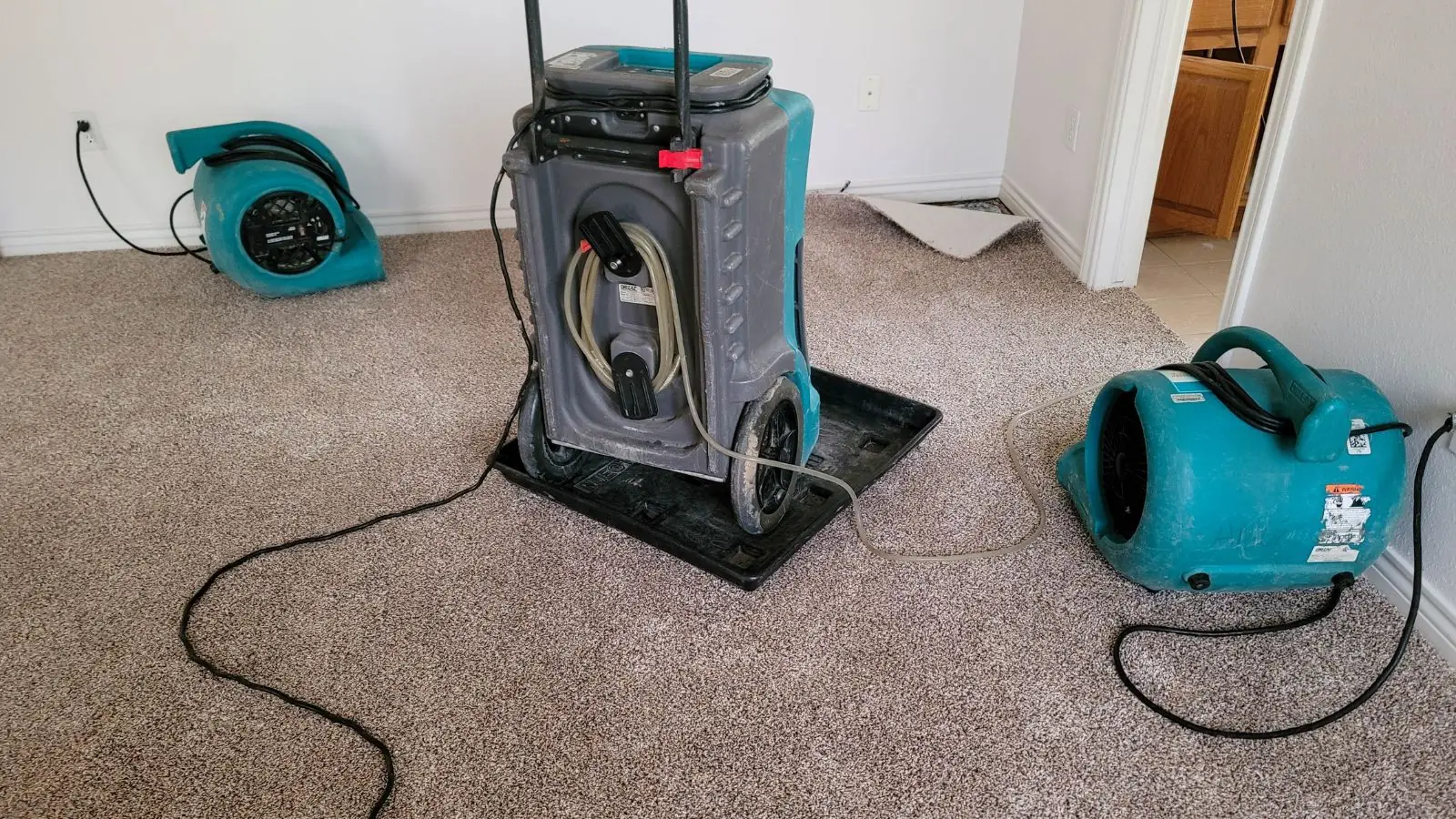
Air movers push air across wet surfaces while LGR dehumidifiers pull moisture out of the air so it does not settle elsewhere.
Daily monitoring
Readings are taken again on each visit. Equipment is adjusted or removed only when readings reach normal levels.
Structural drying: how long it takes and why
Structural drying is the part of mitigation that dries the building itself, meaning studs, subfloor, drywall and concrete. Most jobs run for several days, and the length depends on the water category, the materials and how deep the moisture went. Dense materials such as hardwood and plaster dry more slowly than carpet and drywall.
The equipment is deliberate. Air movers speed evaporation at the surface, and LGR dehumidifiers pull moisture out of the air so it does not settle into other rooms. Closing windows and doors in the drying area is part of the plan, which surprises people who expect fresh air to help.
Drying is finished when readings match a dry reference, not when the room feels dry. If a company removes equipment early to save time, ask for the readings. They are the only proof that moisture is gone.
What causes the need for mitigation in Hopkinton
Hopkinton sits next to water. Whitehall State Park surrounds a 620-acre reservoir, Hopkinton State Park holds a 181-acre reservoir, and the Cedar Swamp area spans about 1,650 acres of wetland the state says stores floodwater for the Sudbury River basin. Town groundwater is also close to the surface in places, which is why basements here can take on water after long rain.
In winter, burst and split lines are the common cause. In spring and fall, saturated ground and clogged gutters send water toward foundations. Whatever the source, the first 48 hours decide whether the job is a drying job or a rebuilding job.
| Equipment | What it does | Why it matters |
|---|---|---|
| Moisture meter | Reads moisture inside wood, drywall and concrete | Shows where water went and when drying is done |
| Thermal imaging camera | Shows temperature differences behind surfaces | Helps find wet areas without opening every wall |
| Air mover | Pushes air across wet surfaces | Speeds evaporation from floors and walls |
| LGR dehumidifier | Removes moisture from the air | Keeps humidity down so moisture does not move to dry areas |
| Extraction unit | Pulls standing water from floors and carpet | Removes bulk water before drying begins |
The industry reference for this work is ANSI/IICRC S500, the published standard for professional water damage restoration. You can ask any company whether its crews work to it, and ask how they measure that drying is complete. For related steps, see emergency water removal for pumping, water damage cleanup for removing contaminated materials, and mold remediation if moisture was left too long.
Cost factors and insurance
The main cost factors are the water category, the area that is wet, the materials involved, how many days of drying are needed and whether rebuilding follows. Insurers often cover sudden and accidental water damage, but flood damage is usually excluded and needs separate flood coverage. Check your policy or ask your insurer.
Want your real number?
Call (508) 446-9244. The scope and price are explained before work starts, and no exact figures are promised over the phone.
Calls from Westborough and Southborough are served from the same base. See the Westborough page or the Southborough page if you are on that side of Hopkinton.
Frequently Asked Questions
Yes. The dispatch line is open 24/7, including nights, weekends and holidays. Tell the dispatcher where the water came from and which rooms are wet. Same-day response is offered when crews are available, and no arrival time is promised.
Most jobs take several days. The exact time depends on the type of water, the materials and how deep the moisture went. Drying is finished when moisture readings match a dry reference, not when the room feels dry.
Equipment alone does not tell you where the water went. Without moisture readings you may stop too early, leaving wet framing behind walls. If you are unsure, call and describe the situation.
Dehumidifiers work best in a closed space. Opening windows lets humid outside air in and slows the process, even though it feels like it should help.
Mitigation stops and limits the damage by removing water and drying the structure. Restoration and repair rebuild what was lost afterward, such as drywall, flooring and paint.