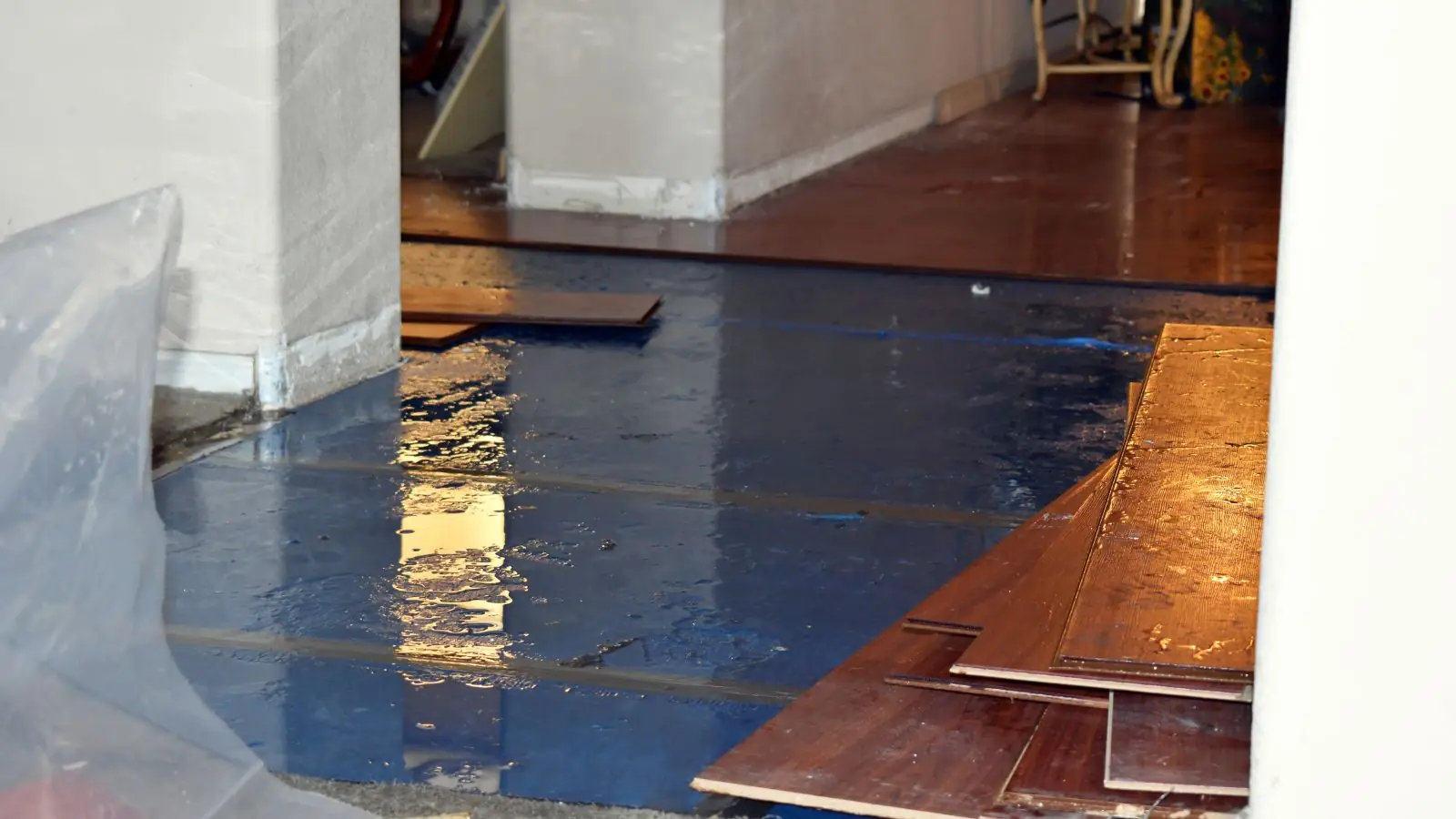
Hardwood floor water damage repair in Hopkinton, MA is the set of decisions made after the floor has dried: patch a few boards, sand and refinish the whole surface, or replace a section or the room. Repair is the rebuilding stage that follows drying, and it is a judgment about three things. Those are how much wood changed shape, what lies underneath it, and whether new boards can match the old.
Start with the dry reading, not the look
The most common repair mistake is acting on how the floor looks instead of how dry it is. Boards can look flat and still hold moisture, and a refinish applied over damp wood will fail. Repair decisions should wait until a meter shows the boards and subfloor have settled to a normal range for the house.
That window is why drying through water mitigation comes first. Once readings are stable for a few days, a floor often changes shape one last time. Wait for that final movement before choosing.
A decision framework in four questions
1. How many boards moved?
A few cupped or stained boards point toward spot repair. A whole room that moved points toward sanding or replacement.
2. Did the shape settle?
If cupping eased as the floor dried, sanding may flatten what is left. If boards stayed raised or split, they are candidates for replacement.
3. Is the subfloor sound?
Soft, stained or delaminating subfloor changes the plan, whatever the boards look like.
4. Can new boards match?
Species, width, age, stain and finish all affect whether a patch disappears or stands out.
Repair, refinish or replace compared
| Option | Best when | Watch out for |
|---|---|---|
| Spot repair | A few boards are stained or damaged and the rest are flat | Color and sheen mismatch at the patch |
| Sand and refinish | Cupping or crowning has eased and the wood is sound | Sanding too early, thin boards that cannot take another sanding |
| Section replacement | Buckled or split boards are limited to one area | Blending new boards into old across a room |
| Full-room replacement | Damage is widespread or the subfloor failed | Cost, plus matching the adjoining rooms |
The subfloor decides more than the boards
Plywood and plank subfloors can swell, delaminate or stay damp long after the finished boards feel dry. If the subfloor is soft, stained or smells musty, the boards above will keep moving. A repair on top of a failing subfloor is a repair that returns.
Any section opened for replacement is a chance to inspect underneath. Look for staining on the underside, fastener rust and evidence of water pooling between joists. Where water came from a plumbing failure, the pipe repair has to be finished before flooring goes back.
Matching is harder than it sounds
Old hardwood darkens, and a new board does not. Even the same species cuts differently from one lot to the next. Sanding and staining the entire visible run of the floor, to a natural break such as a doorway, usually hides a replaced section better than patching with a different color. Ask for a sample patch in an out-of-sight spot, and look at it in daylight before agreeing to the plan.
Older Hopkinton homes and historic districts
The Town of Hopkinton lists the Hopkinton Center Historic District, established by townspeople in 1979 around the Town Common and the south side of Main Street. The town also lists the Woodville Historic District Commission and the Aaron and Lucy Claflin House Historic District at 76 Main Street, established in 2019. Older houses in these areas may have original wide-plank or thin strip floors.
The practical tie-back is that old boards are harder to match and may have little wood left to sand. The town pages describe the districts but do not say whether interior flooring work is regulated, so ask the town before you plan work on a historic property.
Source type: Town of Hopkinton page
Timing after drying
- Confirm dry readings on the boards and the subfloor, repeated over several days.
- Let the floor acclimate in the conditions of the house. Boards that go in too wet or too dry will move later.
- Replace damaged sections and nail or staple them to match the existing pattern.
- Sand once the surface is flat, working through the grits in order.
- Stain if needed, then apply finish in thin coats, letting each cure fully.
- Keep furniture and rugs off the new finish for the time the product requires.
When sanding does not fix it
Sanding removes thickness, and boards only have so much wear layer. If the floor has been refinished before, or if the boards are thin, deep cupping may not sand out without hitting the tongue. Splintered edges, black stains that run through the wood and cracks along the grain are signs that sanding will not solve the problem. A moisture-affected board that has split should be replaced, not filled.
If the water was contaminated
Clean water from a supply line is a different job from floodwater or sewage. The state flooding guide says to assume pathogens are present in sewage backups and to discard porous items. If contamination is involved, flood damage restoration addresses safe removal and sanitizing before any flooring decision. Do not sand or refinish over a floor that has not been cleaned and cleared.
Floor repair also sits inside the wider rebuild described under water damage repair, along with drywall, trim and paint.
If you are nearer Holliston or Milford, the same decisions apply and the same dispatch line covers your home. Check your policy or ask your insurer how flooring is treated, since matching and partial replacement are often policy questions.
Not sure whether to repair or replace?
Call (508) 446-9244. We explain the options for your floor, from spot repair to replacement, before any work starts.
Frequently Asked Questions
Often, if it is fully dry, flat and has enough thickness left to sand. Cupping that has eased is a good candidate. Buckled or split boards usually are not.
Until moisture readings are normal and stable, and the boards have stopped moving. The wait can be a few weeks. Sanding early locks in bad shape and the floor can shift again.
Rarely at first. Old wood darkens, and even the same species varies by lot. Sanding and staining a full run of the floor to a natural break makes the blend look intentional.
The town lists several historic districts, but its pages do not say whether interior flooring work is regulated. Ask the town before work on a property inside a district.
Replace the damaged subfloor first, after the source is fixed and the framing is dry. Flooring laid over a weak subfloor tends to cup, squeak or lift again.