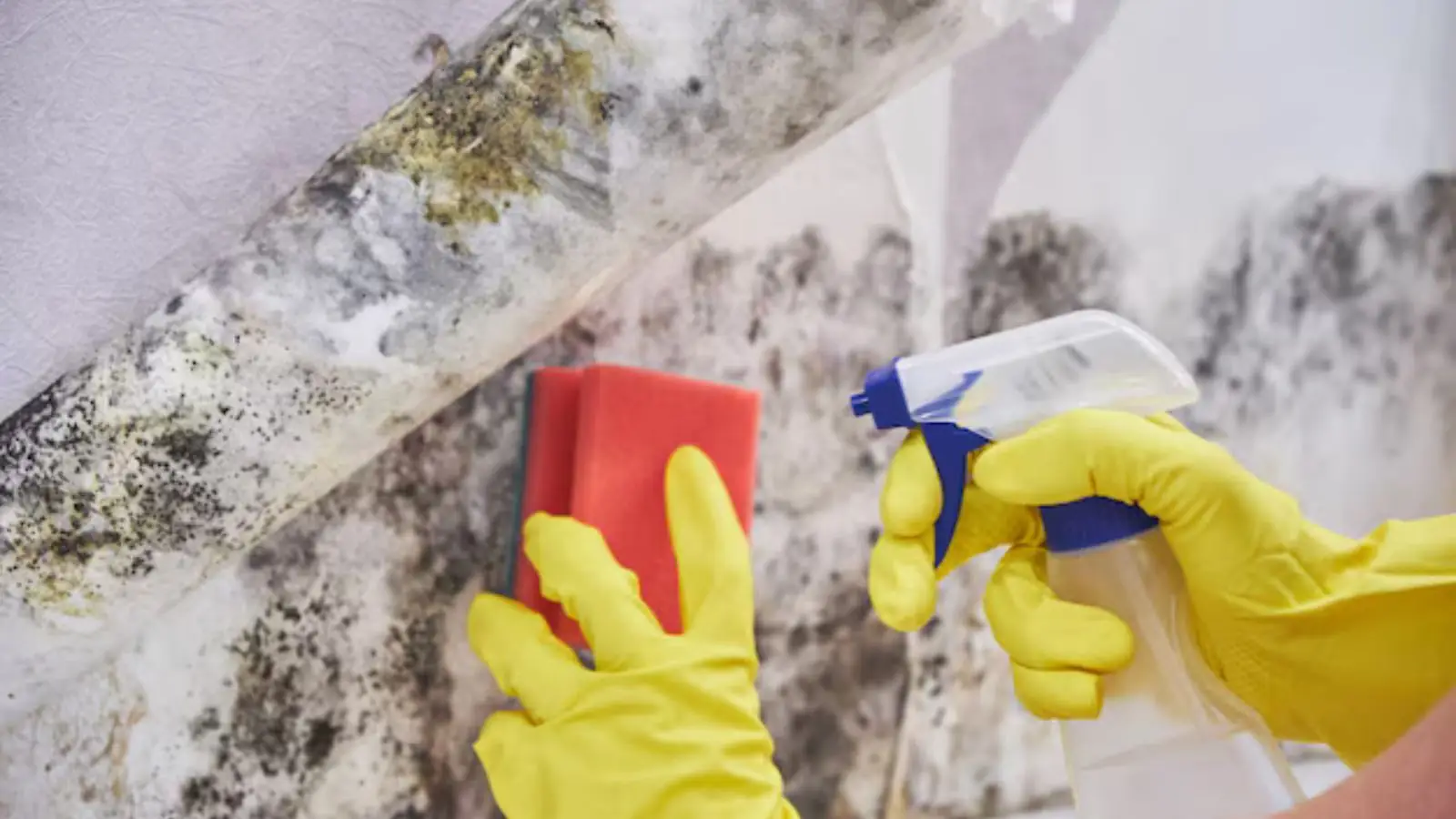
Knowing how to get rid of mold in Hopkinton, MA begins with two ideas. First, small patches on hard surfaces can often be cleaned by a homeowner. Second, no cleaning lasts unless the moisture that fed the mold is fixed. Mold removal means taking growth off or out of a building and correcting the damp conditions behind it. State guidance shows where the do-it-yourself line sits, which small jobs suit a careful homeowner, and when to call a trained professional.
Step zero is always the water
DPH puts it simply. To stop mold growth, you need to find out where the water or moisture is coming from and fix it. If a pipe drips, a roof leaks or a basement stays damp, scrubbing only gives mold a short break.
So before you open a bottle of cleaner, check for an active leak, confirm that the area is drying, and think about ventilation. Bathrooms need fans that actually vent, and basements may need a dehumidifier. If you cannot find the source, that is a reason to call someone, not a reason to clean harder.
The 10 square foot line
The state guide notes that EPA recommends having professionals handle mold areas larger than 10 square feet. That is roughly a patch three feet by three feet. Below that, a careful homeowner can often manage. Above it, or when growth is inside a wall, in an air duct or on materials that soak up water, plan on help.
Also be cautious if the mold followed sewage or contaminated flood water. Those jobs bring other hazards and need a different approach.
| Situation | Homeowner can handle | Better to call |
|---|---|---|
| Small spots on tile, glass, sealed wood or metal | Yes, with detergent and water | Only if it keeps coming back |
| Growth on drywall, ceiling tiles or carpet | Usually no, these are porous and are generally discarded | If more than a patch or hard to remove |
| Area larger than about 10 square feet | No | Yes, ask for a written scope |
| Mold inside a wall, attic or under flooring | No | Yes, it needs opening and containment |
| Mold after sewage or flood water | No | Yes, contamination changes the job |
| Anyone in the home with asthma or a weakened immune system | Keep them away | Consider professional help |
How to clean a small patch on a hard surface
DPH says mold can generally be cleaned with detergent and water, and it usually does not recommend bleach. That surprises people, but it fits the facts. Cleaning means physically removing the growth, not just changing its color.
- Fix the moisture source and let the area dry.
- Put on gloves, eye protection and a mask or respirator suited to the job. Keep other people, children and pets out of the room.
- Scrub the surface with detergent and water using a rag or brush. Do not dry-brush or sweep, which sends spores into the air.
- Rinse or wipe with clean water and dry the surface completely, using a fan or dehumidifier.
- Bag the rags and any waste before taking them through the house.
- Recheck in a few days. If growth comes back, there is still moisture.
Never mix bleach and ammonia
DPH specifically warns not to mix bleach and ammonia. That includes household cleaners that contain either one, so read labels. Pick one product, use it as directed, never combine cleaners and keep the room ventilated.
What not to do
- Do not paint or caulk over mold. DPH is direct on this point.
- Do not try to keep wet drywall, insulation or wood trim that has been contaminated. DPH advises discarding contaminated porous materials such as these after a flood.
- Do not use a leaf blower, vacuum or broom on dry mold. Disturbing it spreads spores.
- Do not sand or scrape painted surfaces without thinking about lead. The state guide notes that disturbing more than 6 square feet of painted interior surface brings lead renovation rules into play.
- Do not assume a stain is harmless because it is small. Check behind it.
Protecting people in the house
DPH lists health concerns separately for a reason. People with asthma, chronic respiratory problems, allergies or weakened immune systems may react seriously to mold, and they, along with children and pets, should stay away from cleanup. Symptoms the state lists include a runny nose, sneezing, coughing, wheezing and burning eyes.
If someone in your home is in one of these groups, think twice about doing even a small cleanup yourself.
Who is doing the work in Hopkinton homes
According to Census QuickFacts, about 86.7 percent of Hopkinton housing is owner-occupied, across roughly 6,660 households. The 2004 town housing plan found nearly 90 percent of units were single-family. That is a lot of homeowners deciding for themselves whether to clean or call. The state home improvement program says homeowners doing their own work do not need to register, but rebuilding after removal can still need a permit, so ask Inspectional Services before you open walls.
Source type: Census QuickFacts and town housing plan
When it is time to hand it off
Call for help if the patch is large, if you cannot find where the water is coming from, if the mold is inside a wall or beneath flooring, or if someone in the house is sensitive. A professional mold remediation job uses containment, filtered air and careful removal so spores are not pushed into the rest of the house. If the room is still wet, water damage cleanup comes first.
We help homeowners in Milford and Holliston with the same split between what you can do and what needs a crew.
Not sure which side of the line you are on?
Call (508) 446-9244. Tell us what you see and how large it is, and we will tell you whether it sounds like a job to handle yourself.
Frequently Asked Questions
DPH says mold can generally be cleaned with detergent and water and that bleach is usually not recommended. Whatever you use, never mix bleach and ammonia, and keep the area ventilated.
The state guide notes that EPA recommends professionals handle mold areas larger than 10 square feet. Smaller patches on hard surfaces can often be cleaned by a careful homeowner after the moisture is fixed.
It will if the moisture is still there. DPH says to find where the water is coming from and fix it. Cleaning removes growth, but only dry conditions keep it from returning.
Porous materials like these usually cannot be cleaned and are removed. DPH advises discarding contaminated porous materials such as wallboard, insulation and wood trim after a flood. Remove them carefully, bag them and avoid breaking them up.
State home improvement registration applies to contractors working on owner-occupied homes, and homeowners doing their own work need not register. A permit may still be required for rebuilding, so ask Inspectional Services at Town Hall.