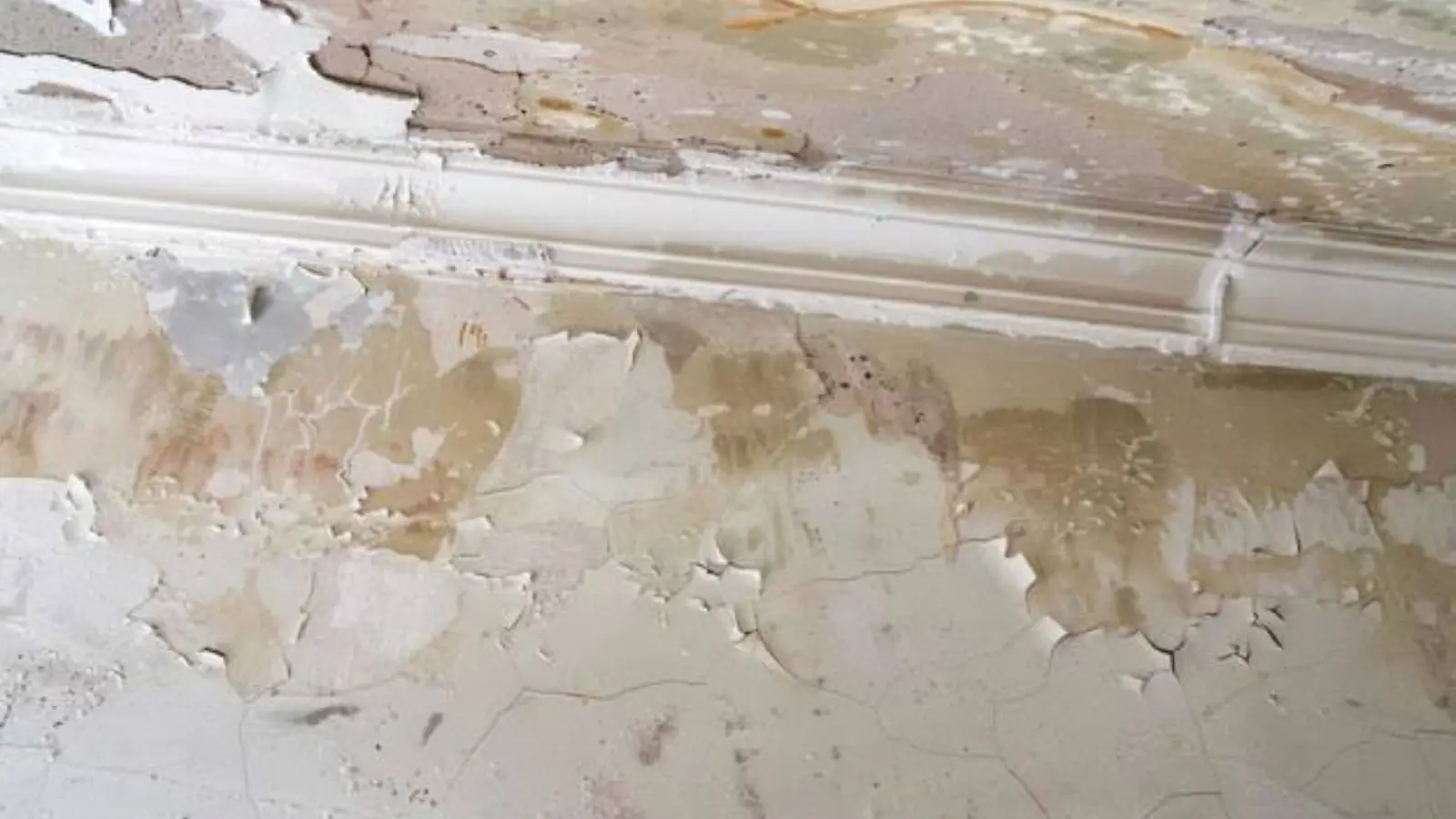
Ice dam ceiling water damage in Hopkinton, MA happens when snow melts on a warm part of the roof, runs down and refreezes at the cold eaves. The ridge of ice that forms is an ice dam, and it blocks meltwater from draining.
The water then backs up under shingles, soaks the roof deck and insulation, and appears as a stain or drip on a ceiling or an exterior wall. This guide explains how that happens, what to do the moment you see it and how the damage is dried.
How an ice dam turns into a ceiling leak
Heat escaping from the living space warms the roof's upper surface. Snow melts there, the water runs downhill and meets the eave, which stays cold because it overhangs the walls. The water freezes into a growing ridge. More melt then stacks up behind it.
Shingles are built to shed water downhill, not to hold a pond. Standing meltwater creeps up under the shingles, through nail holes and seams, into the sheathing. From there it soaks the insulation, spreads across the top of the ceiling drywall and finally shows as a brown stain, a bubble or a drip.
Signs you have an ice dam problem
What to look for
- Thick ridges of ice along the eaves, or long icicles at the gutter line
- Brown or yellow stains on a ceiling or at the top of an exterior wall
- Paint bubbling or peeling near the ceiling edge
- Damp or compressed attic insulation near the eaves
- Dripping during a thaw that stops when the temperature falls again
Leaks from ice dams often come and go with the weather. A stain that appears after a warm afternoon and a cold night is a clue. That timing helps separate an ice dam from a plumbing leak, which usually runs regardless of temperature.
What to do in the first hour
- Move furniture and belongings away from the wet spot and cover what you cannot move
- Place a bucket under any drip and keep people out from under a bulging or sagging ceiling spot
- Turn off power to the room if water is near a light fixture or outlet, from a dry location
- Photograph the stain, the ice and the roof edge from the ground
- Call for water removal and drying before the insulation stays wet for days
Stay off the roof. Climbing onto an icy slope to chip away at the dam is risky. Hammers and axes also damage shingles. If the dam needs removing, it is a job for people with fall protection and the right tools.
What a Hopkinton winter looks like on paper
The National Weather Service's 1991 to 2020 climate normals for Worcester, the nearest regional station and not Hopkinton itself, show a normal 72.9 inches of snowfall a year. Exact snowfall in town will vary, but the pattern fits, because repeated freeze and thaw cycles are what feed ice dams. If your attic or roof edge has shown trouble before, prepare before heavy snow rather than after the first stain.
Source type: NWS 1991-2020 normals, Worcester regional station
How wet insulation and drywall are dried
The visible stain is only the start. Water spreads sideways across the attic floor and down through wall cavities. Moisture mapping with a meter shows how far it travelled, and thermal imaging helps find wet areas that look dry.
Insulation that has been soaked loses its insulating value and holds moisture against the framing. It is usually removed from the wet area. Drywall that has sagged or gone soft is cut back to solid, dry material. Air movers and dehumidifiers then dry the cavity. Our emergency water removal page explains the first extraction and drying steps.
The state health guide says wet porous materials should be dried within 24 to 48 hours or mold growth is likely. Because attics are cold and closed, wet insulation can hide moisture problems for weeks. That is the reason to act at the first stain, not the first thaw.
Repairing the ceiling afterward
Once readings are normal, the repair depends on how long the area stayed wet. A small dry stain may only need stain-blocking primer and paint. Soft or sagging drywall is patched, taped and finished. New insulation goes in after the framing passes inspection. Our water damage repair page describes how those decisions are made.
Do not paint over a damp ceiling. It hides the problem and traps moisture. Do not paint or caulk over any dark spots either, since the state advises against painting over mold. Fix the cause, dry the area and then finish.
Reducing the chance it happens again
Ice dams are a heat and airflow problem as much as a roof problem. The usual fixes involve sealing air leaks from the living space into the attic, adding insulation and keeping the attic ventilated so the roof deck stays cold. A roofer or insulation contractor can assess the details for your house.
| Cause | Typical response |
|---|---|
| Warm air leaking into the attic | Seal gaps around fixtures, hatches and wiring |
| Thin or uneven insulation | Add or even out insulation over the living space |
| Poor attic ventilation | Improve airflow so the roof deck stays cold |
| Clogged gutters | Clear debris before winter so meltwater can drain |
| Heavy snow load on the roof | Remove snow from the edge with a long-handled roof rake from the ground |
Insurance is worth a call after a winter leak. A standard homeowners policy usually covers sudden and accidental damage, but wear and tear is excluded, so check your policy or ask your insurer. If your home is in Milford or Holliston, our Milford service area and Holliston service area pages show how coverage extends nearby.
| Factor | How it changes the job |
|---|---|
| Area of wet insulation | More wet insulation means more removal and replacement |
| Ceiling condition | Sagging drywall is replaced, dry stains may only be primed |
| Time wet | Longer wet periods raise the chance of mold and framing damage |
| Access | Low attics and tight eaves take longer to work in |
| Rebuild finish | Matching texture and paint adds time |
Ceiling stain or drip this winter?
Call (508) 446-9244. We explain the scope and the drying plan before work begins.
Frequently Asked Questions
An ice dam is a ridge of ice at the roof edge that blocks melting snow from draining. The trapped water backs up under shingles and can leak into the attic and ceiling.
No. Climbing an icy roof is dangerous, and hammers and axes damage shingles. A roof rake used from the ground can remove snow from the edge, and removing ice itself is best left to trained people.
A standard policy usually covers sudden and accidental water damage, and excludes wear, tear or neglect. Coverage depends on the cause and your wording, so check your policy or ask your insurer.
As soon as possible. State health guidance says wet porous materials should be dried within 24 to 48 hours or mold growth is likely.
The nearest regional station, Worcester, shows a normal of 72.9 inches a year in the 1991 to 2020 National Weather Service normals. Hopkinton itself may differ.