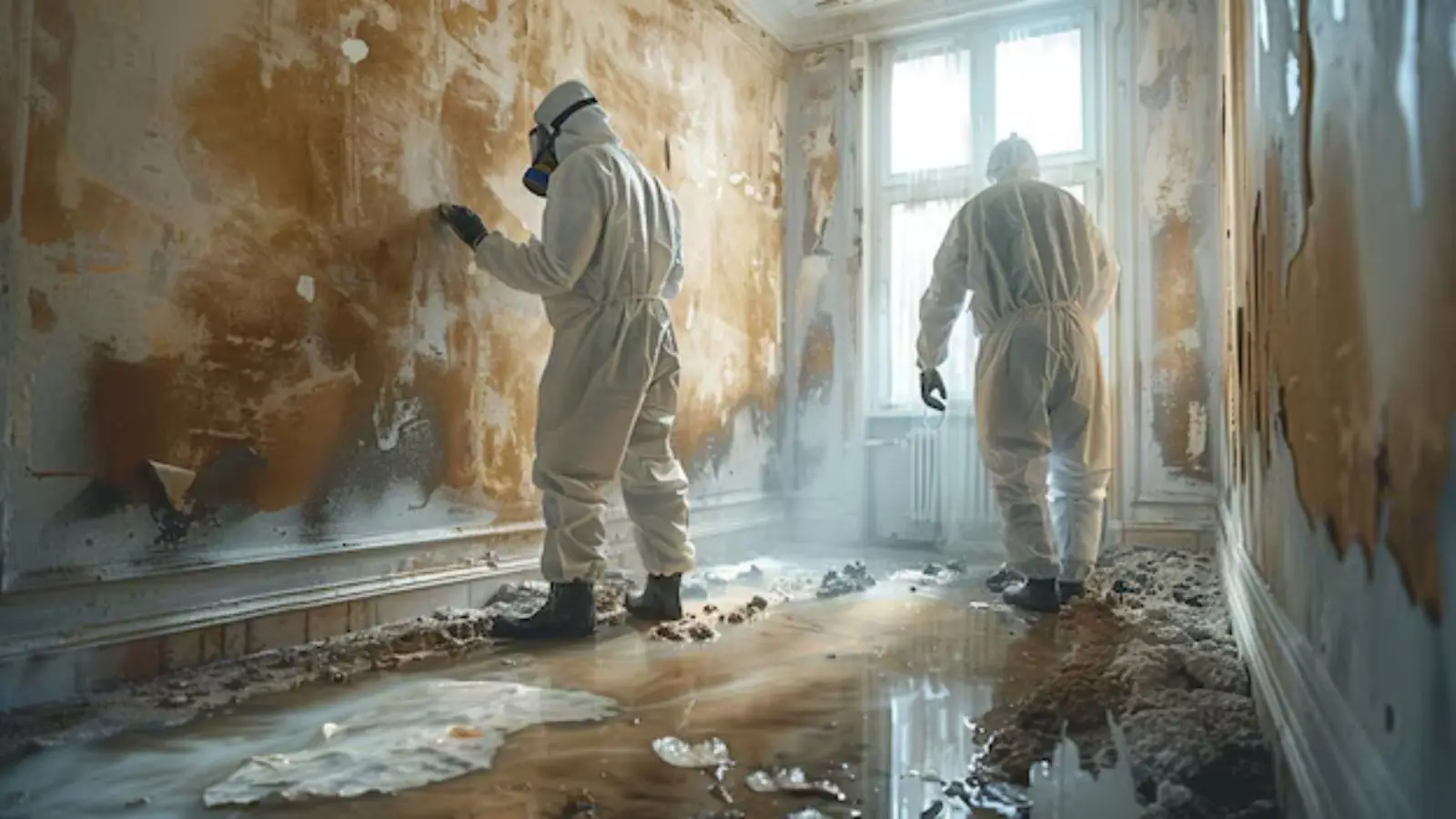
Mold from water damage in Hopkinton, MA is rarely a mystery. Mold is a fungus that grows indoors when spores settle on a damp, organic surface such as drywall paper, lumber, insulation or carpet backing. Spores are already in the air of every home, so the missing ingredient is nearly always water that stays too long. The Massachusetts Department of Public Health (DPH) sets a clear target, and this post shows exactly how one wet event becomes a mold problem.
The chain from water to mold
Mold does not appear the moment a pipe fails. It follows a sequence, and each step gives you a chance to break the chain.
First, water reaches a porous material. Second, the material holds it, because drywall, insulation and wood release moisture slowly. Third, the air around it stays still and humid, often inside a wall, under a floor or above a ceiling where nobody is looking. Fourth, mold starts to colonize. Break the chain at step two with fast drying and the rest never happens.
What the state says about the 24 to 48 hour window
DPH guidance says wet areas should be completely dried in 24 hours. The state Housing Code goes on to say that areas affected by leaks or floods should be dried within 48 hours. DPH also notes that wet porous materials need drying within 24 to 48 hours or mold growth is likely.
Those numbers are worth taping to the refrigerator. They are not a promise that mold appears at hour 49. They are a practical deadline for getting moisture out before the odds turn against you.
The same guidance admits something honest about floods. After a flood, drying inside 24 to 48 hours may be difficult, because the water is deeper, the materials are wetter and the whole house may be damp. That is the case for calling a drying crew early rather than waiting to see whether the fans in your closet are enough.
Why some water events grow mold faster than others
| Water event | Why it can lead to mold | What helps most |
|---|---|---|
| Burst or leaking supply line | Wet insulation and drywall inside a wall cavity stay damp out of sight | Shut off water, open the cavity, dry it with air movement |
| Slow leak under a sink or behind a toilet | Low, steady moisture can go unnoticed for weeks | Fix the source first, then dry the cabinet base and subfloor |
| Roof or ice dam leak | Water soaks attic insulation and ceiling drywall | Stop the entry point, remove soaked insulation, dry the ceiling |
| Basement seepage or flooding | Concrete, carpet and stored boxes stay damp for days | Remove standing water, run dehumidification, discard soaked porous items |
| Appliance overflow | Water travels under flooring and into wall bases | Check below the flooring, not just the surface |
The hiding places that make the clock run faster
Water that you can see is only part of the problem. The wet spots that matter most for mold are the ones you cannot see, because nobody is drying them.
Think about the baseboard cavity behind a wall that shared a pipe, the underlay below a floating floor, the insulation sitting on the back of a ceiling, and the bottom of cabinets. These spaces trap humidity, and trapped humidity is what turns an ordinary leak into a long-running moisture problem.
Stop the source before anything else
DPH is clear that to stop mold growth you need to find out where the water or moisture is coming from and fix it. Drying a wall that keeps getting wet only buys you a few days. Shut off the supply, patch the roof entry or deal with the drainage, then dry what the water touched.
What to do in the first 48 hours
- Stop the water at the source, then photograph the damage and any water height before cleanup. Note the time you found it.
- Remove standing water and pull up anything soaked that can be moved, such as small rugs, boxes and cushions.
- Open the room to air movement and run a dehumidifier if you have one. Open cabinet doors and drawers.
- Call a restoration crew if water reached walls, insulation or flooring, or if it covers more than a small spot. Professional water mitigation uses meters to confirm what is actually dry.
- Keep an eye out for a musty smell, new stains or soft spots over the next several days. Those are signs of trapped moisture.
Should you test for mold?
Probably not. DPH does not recommend routine mold testing as part of water damage remediation, and it notes there are no federal or state standards that define a safe or unsafe amount of mold. A test result therefore rarely changes what you do.
What does change the plan is the moisture reading, the size of the affected area and whether visible growth or a persistent musty odor is present. Spend the money on finding and drying the wet material, not on a lab report.
Why Hopkinton homes see wet seasons
The National Weather Service's 1991 to 2020 normals for Worcester, the regional climate station and not Hopkinton itself, show about 48.26 inches of precipitation a year and about 72.9 inches of snow. That much moisture tests roofs, gutters and foundations every year. Check ceilings and basement walls after any thaw, because the 24 to 48 hour window starts when the water arrives, not when you notice it.
Source type: NWS 1991-2020 normals
When mold has already started
If you find fuzzy or discolored growth, a musty smell or a stain that keeps coming back, the job changes from drying to cleanup. Small patches on hard surfaces can often be handled by a homeowner. Larger areas, growth inside walls or growth on porous materials usually need a proper plan with containment.
That is where mold remediation comes in. The aim is to remove the growth, remove materials that cannot be cleaned, and fix the moisture so it does not return. We also help homeowners in nearby Westborough and Milford with the same two-step approach, drying first and mold work second.
Wet materials and a clock running?
Call (508) 446-9244. We answer around the clock, explain what needs drying, and lay out the scope before work begins.
Frequently Asked Questions
The state guidance does not give a single hour. It says wet areas should be dried in 24 hours, that leak-affected areas should be dried within 48 hours, and that wet porous materials not dried in 24 to 48 hours are likely to grow mold. Treat that as your working deadline.
Yes, if the material behind or under the surface is still wet. Drywall faces can feel dry while insulation inside the wall stays damp. A moisture meter is the only way to know for sure.
Usually not. DPH does not recommend routine mold testing as part of water damage remediation, and no state or federal standard defines a safe amount. Finding and drying the moisture matters more than a lab result.
Not by much. Mold needs moisture and an organic surface, and clean water supplies both. Dirty water adds contamination concerns on top, which changes what must be thrown away, but clean water left in place can still lead to growth.
No. Massachusetts does not require a license for mold remediation, according to the DPH Community Sanitation Program. That makes it worth asking any company about its process, containment methods and written scope before you sign.