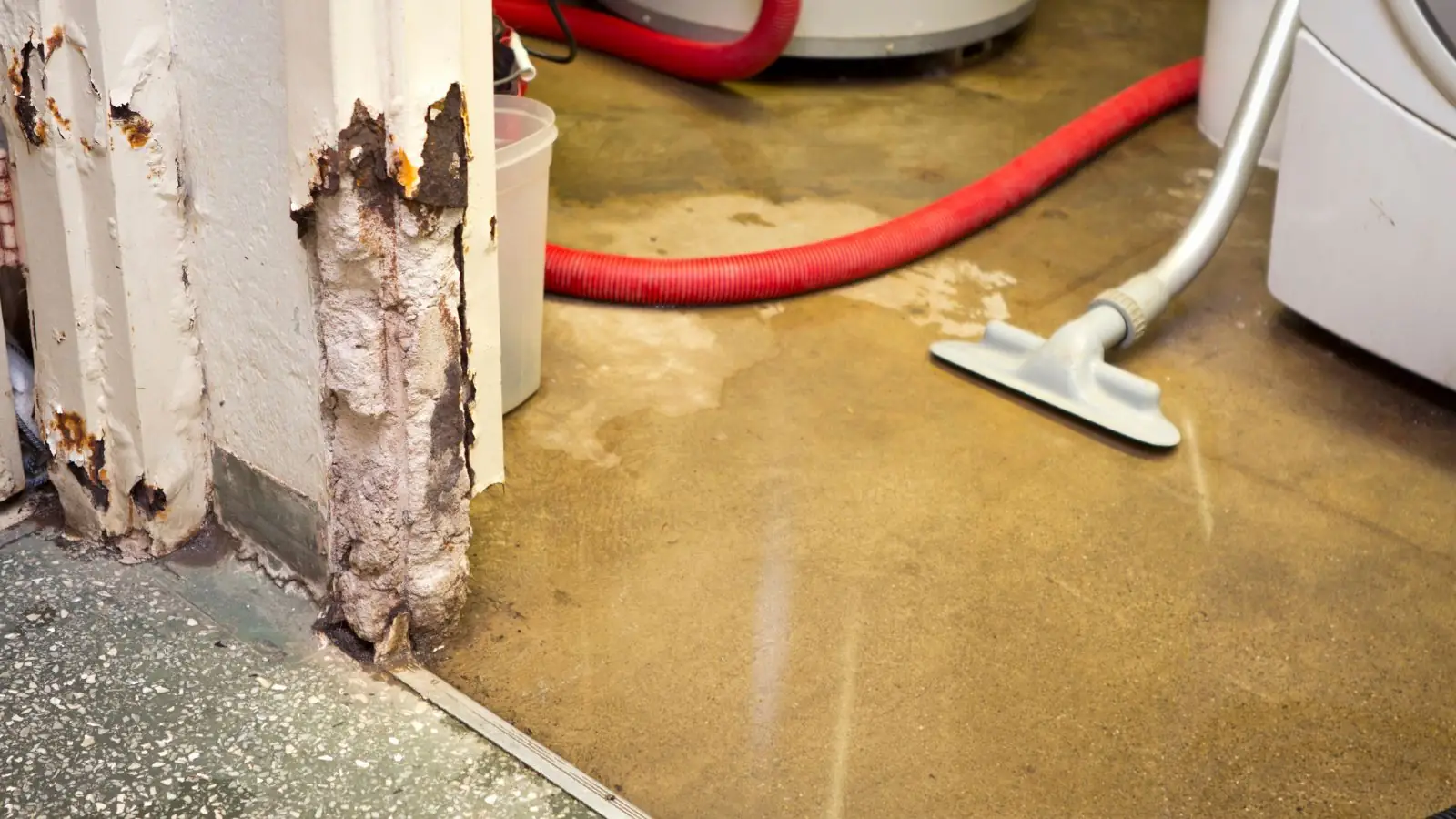
Sump pump failure in Hopkinton, MA turns a dry basement into a flooded one, often during the same storm that raises the water table. A sump pump is a small pump set in a pit in the basement floor that collects groundwater and sends it outside, away from the foundation.
When it stops, whether from a power outage, a stuck switch or a clogged line, groundwater has nowhere to go but up. This guide covers why pumps fail, what to do and how insurance treats it.
Why sump pumps fail when you need them most
Pumps work hardest during heavy rain and spring melt, which is also when outages happen. Most failures fall into a short list of causes. Knowing them tells you what to check before storm season.
| Cause | What it looks like | What helps |
|---|---|---|
| Power outage | Pump silent during a storm | Battery backup or a generator, run safely outdoors |
| Stuck float switch | Water rises but the pump never starts | Test by lifting the float or pouring in water |
| Clogged intake or discharge line | Pump runs but water does not leave | Clear debris and check outside outlet |
| Frozen discharge pipe | Pump runs in winter with no flow | Check that the outlet drains and is not iced over |
| Worn motor | Loud noise, constant running or no response | Replace an aging pump before storm season |
| Undersized pump | Runs nonstop and still loses ground | Have the capacity assessed for your pit |
Test the pump a few times a year. Pour a bucket of water into the pit and watch it start, run and shut off. Check that water leaves the discharge pipe outside and drains away from the house, not back toward the foundation.
What to do when the pump fails and water rises
- Stay out of the water if the basement has outlets, a panel or appliances nearby, and shut off power from a dry location
- Check whether the pump has power, the float moves freely and the discharge line is open
- Move belongings, boxes and furniture up off the floor
- Photograph the water height and the pump before anything is touched
- Call for water removal if the water is more than a puddle
Basement groundwater is not clean. It can carry soil, bacteria and anything stored on the floor. The Massachusetts home care guide says to assume pathogens are present, to wear gloves, eye protection and boots, and to discard food, medicines, mattresses, carpet padding and cardboard that got wet.
Why removing the water quickly matters
Basement walls and slabs can take on moisture quickly. Drywall wicks water upward from the bottom, wood framing absorbs it and stored items start to fail. The state health guide says wet areas should be completely dried in 24 hours and that leaks and floods should be dried within 48 hours under the Housing Code.
When the ground outside is saturated, pumping out a deep basement all at once can stress walls and the floor slab. Professionals check conditions outside and remove water in stages. Our flood damage restoration page describes how flooded basements are handled from removal to rebuild.
Groundwater, wetlands and Hopkinton basements
The town's 2004 housing plan, hosted on mass.gov, says wetlands and wastewater disposal are significant land use constraints in many parts of Hopkinton.
The Cedar Swamp ACEC, about 1,650 acres shared with Westborough, is mostly wetland that stores floodwater for the Sudbury River basin. For a homeowner near a wetland edge, brook or pond, the practical point is that a high water table can leave a sump pump running often, so a backup pump or battery is worth considering before the next storm.
Source type: 2004 Hopkinton Housing Plan on mass.gov and EEA/DCR
What the state says about insurance
The Division of Insurance states that sump pump failure is excluded from standard policies unless you added an endorsement. Seepage through basement walls is also not covered, and no endorsement exists for it. Sewer and drain backup is excluded too, though most insurers offer an endorsement.
Flood from outside is a separate matter. Standard policies do not cover flood, and flood policies usually take effect 30 days after purchase. The National Flood Insurance Program limits coverage in basements. Check your policy or ask your insurer which category your event falls into, and report the loss immediately.
Document first
Photograph the water height, the pump, the discharge line and the damaged belongings before cleanup. The state advises photographing damage and water height before cleanup begins.
Drying a basement after the water is out
Pumping is the first step, not the last. Concrete holds moisture, and finished walls hide wet insulation and wood. Moisture meters show how far water reached, and dehumidifiers pull humidity from the air. Our water mitigation page explains how drying is measured until the readings are normal.
Dry quickly and watch for mold. The state recommends finding and fixing the moisture source, discarding contaminated wallboard and insulation after a flood and not painting or caulking over mold. Environmental mold testing is not recommended as part of water damage cleanup.
Preventing the next failure
Pre-storm sump pump checklist
- Test the pump with a bucket of water
- Confirm the discharge pipe drains well away from the foundation
- Clear the pit of silt and debris
- Consider a battery backup for power outages
- Keep stored items off the floor on shelves or pallets
- Ask your agent about a sump pump and sewer backup endorsement
If your home is in Ashland or Southborough, our Ashland service area and Southborough service area pages show how nearby coverage works.
| Factor | How it changes the job |
|---|---|
| Water depth and duration | Deeper, longer events soak more materials |
| Finished or unfinished | Finished walls and floors add removal and rebuild |
| Water category | Contaminated water adds cleaning and disposal |
| Contents | Stored belongings add sorting and disposal |
| Pump and drainage repair | Replacing a failed pump is a separate trade |
Basement flooding right now?
Call (508) 446-9244. We explain the scope and the plan before work begins.
Frequently Asked Questions
The state says sump pump failure is excluded unless you added an endorsement. Check your policy or ask your insurer whether an endorsement is in place.
The most common reasons are a power outage, a stuck float switch, a clogged discharge line or an old motor. A battery backup helps with outages.
Assume it is not. The state advises gloves, eye protection and boots, and discarding porous items such as mattresses, carpet padding and cardboard that got wet.
State guidance says wet areas should be completely dried in 24 hours, and the Housing Code requires areas affected by floods to be dried within 48 hours.
Wetlands are a significant land use factor in many parts of town, according to the 2004 housing plan hosted on mass.gov. Homes near wetlands or brooks may see higher water tables.