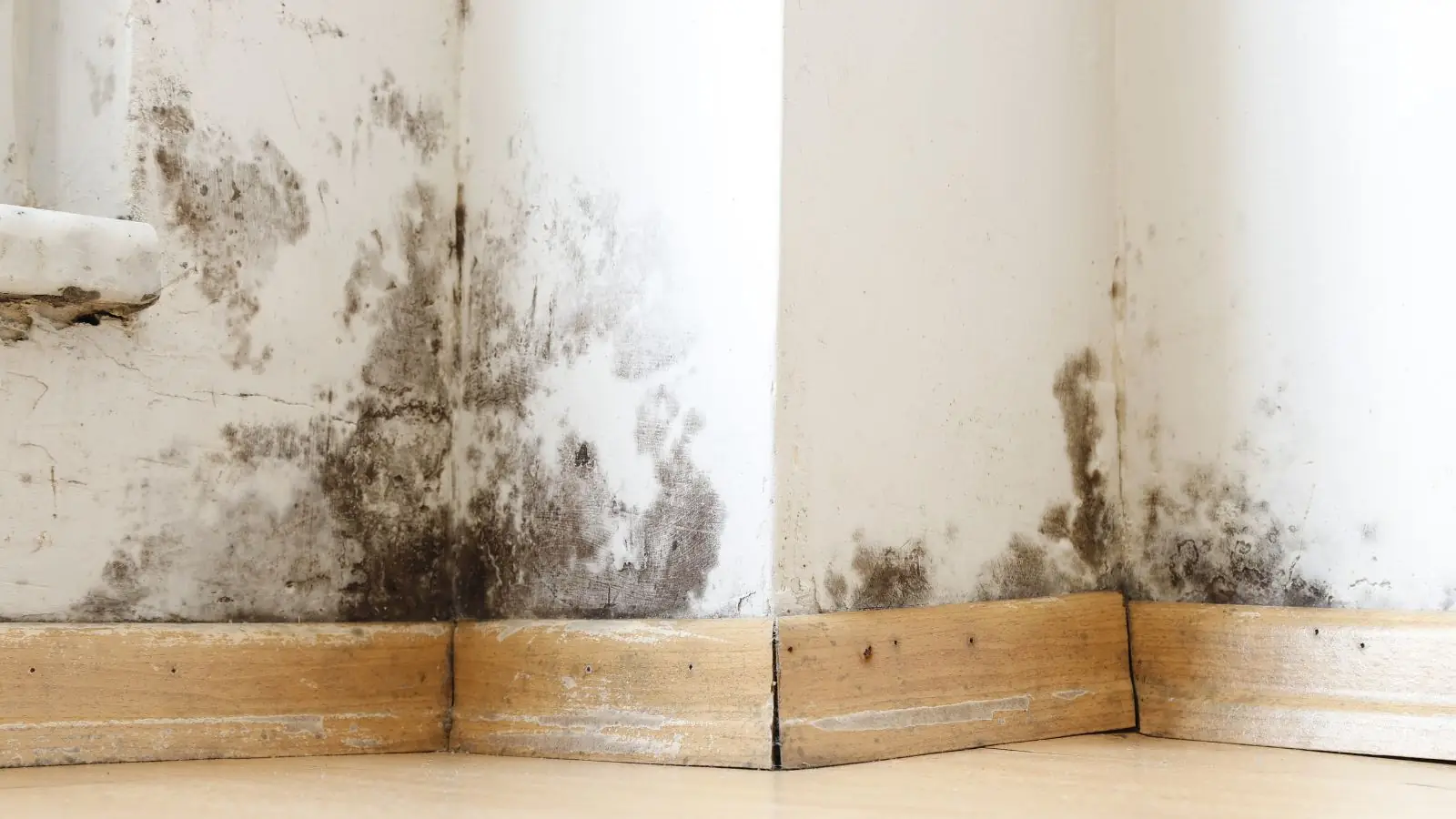
Water damage and mold in Hopkinton, MA often show up together, but they are not the same thing. Water damage is any harm done by moisture to a building's materials, from swollen trim to saturated insulation. Mold is a living growth that may follow when those materials stay wet. After a leak, you need to answer two separate questions. Where did the water go, and has anything started to grow? This guide walks through both with a simple decision table.
Moisture and mold are two different findings
Moisture is a condition. Mold is an organism. A wall can be wet with no mold at all if you catch it early, and a wall can look dry on the surface with mold living on the back of the drywall.
That difference decides your next step. Wet but clean materials need drying. Materials with visible growth need cleanup or removal, and the moisture behind them needs fixing too. Treating one as the other wastes time and money.
Where mold hides after a leak
Inside walls
A supply line leak in a wall sends water down the cavity, soaking the insulation and the back of the drywall. The wall may look fine for days. Clues include a bubbling paint line, a soft spot near the baseboard, a stain that keeps returning and a musty smell that gets stronger when the heat comes on.
Under flooring
Water slips beneath laminate, vinyl and hardwood and sits on the subfloor. Look for edges that lift, boards that cup, gaps that open up and a damp, earthy smell near the baseboards. Carpet is easier to check because you can pull a corner back and feel the pad underneath.
Insulation and attic spaces
Wet insulation above a ceiling stays wet for a long time because it dries slowly. Ceiling stains with a ring pattern suggest water has been moving through more than once. Insulation that has been soaked generally cannot be saved, since it holds moisture against the framing.
Cabinets, closets and corners
The back of a vanity, the toe kick of a kitchen cabinet and the corner behind a refrigerator are all spots where water collects out of view. Closets on exterior walls and rooms with poor air flow are worth a quick look as well.
A decision table for what you are seeing
| What you notice | Most likely meaning | Reasonable next step |
|---|---|---|
| Damp surface, no smell, no growth | Recent moisture, caught early | Dry it now with air movement and dehumidification, then recheck in a day |
| Musty smell with nothing visible | Moisture trapped behind or under a surface | Have materials checked with a meter and open the suspect area |
| Small spots on a hard, sealed surface | Surface growth | A homeowner can usually clean it with detergent and water, then fix the moisture |
| Growth on drywall, wood trim or insulation | Porous material is affected | Plan for removal of the affected material, not just wiping |
| Growth or stain larger than about 10 square feet | Beyond the size the state guide says to handle yourself | Call a professional for a written scope |
| Stains return after painting | Source is still active | Find and fix the leak before any repair |
Do not paint or caulk over it
DPH guidance is direct that you should not paint or caulk over mold. Covering growth does not remove it, and it hides a moisture problem that will keep feeding it. Fix the source, clean or remove what is affected, and only then finish the surface.
A simple inspection routine
- Start at the source. Confirm the leak is stopped and the supply is off or repaired.
- Look up. Check ceilings below bathrooms, laundry rooms and roof lines for rings, sags and fresh paint bubbles.
- Look low. Press baseboards, cabinet bases and the bottom edge of drywall with a flat hand. Soft, crumbly or cool-damp means moisture.
- Look under. Lift a corner of carpet or check the gap beside flooring. Use a flashlight along baseboards.
- Use your nose. A persistent musty smell is worth acting on even when nothing is visible.
- Write it down. Record what you found with dates and photos. If you file an insurance claim, report it to your agent or company right away.
Why testing is not the first move
Many people ask whether to buy a test kit. DPH does not recommend routine mold testing as part of water damage work, and it notes that no federal or state standards define a safe amount of mold. A result usually will not change the plan.
A moisture meter and an inspection of the affected materials are more useful. They tell you what is wet, how far it goes and what has to be removed or dried.
Hopkinton's Board of Health and mold questions
The Town of Hopkinton's Health Services page covers environmental health, septic and Title 5 forms, wells and sewage disposal systems. It does not mention mold or housing inspections. So for a mold question about your own home, the state DPH guidance is the reference to follow. If the water came from a septic or sewage problem, treat it more seriously and tell the Board of Health.
Source type: Town of Hopkinton page
When to bring in help
Call a professional if water reached wall cavities, insulation or flooring, if you see growth on porous materials, or if the affected area is larger than about 10 square feet. A crew can dry the structure with water damage cleanup methods and handle growth through mold remediation under containment, so spores are not spread through the house.
We also work with homes in Ashland and Holliston, and the same checklist applies there.
Found something and unsure what it is?
Call (508) 446-9244. Describe what you see and we will help you work out whether it is moisture, mold or both.
Frequently Asked Questions
Water damage is harm done to materials by moisture, such as swelling, staining or softening. Mold is a growth that can follow when those materials stay wet. You can have water damage with no mold, but mold in a home almost always means moisture.
Not without opening the wall. Clues include a musty smell, bubbling paint, soft drywall near the baseboard and stains that return. A professional can check with a moisture meter and open a small section to look.
No. Stains can come from dirt, old water marks, tannins or iron. A stain that grows, smells musty or returns after painting is worth taking seriously. Color alone does not tell you whether it is mold or how bad it is.
The state guide notes that EPA recommends professionals handle mold areas larger than about 10 square feet. Even for smaller patches, fix the moisture first and keep children, pets and anyone with respiratory problems out of the area.
Start with the DPH guidance on mass.gov and a restoration company that can measure moisture. The town's Health Services page covers septic, wells and sewage disposal but does not mention mold, so ask the Board of Health if you are unsure who handles your situation.