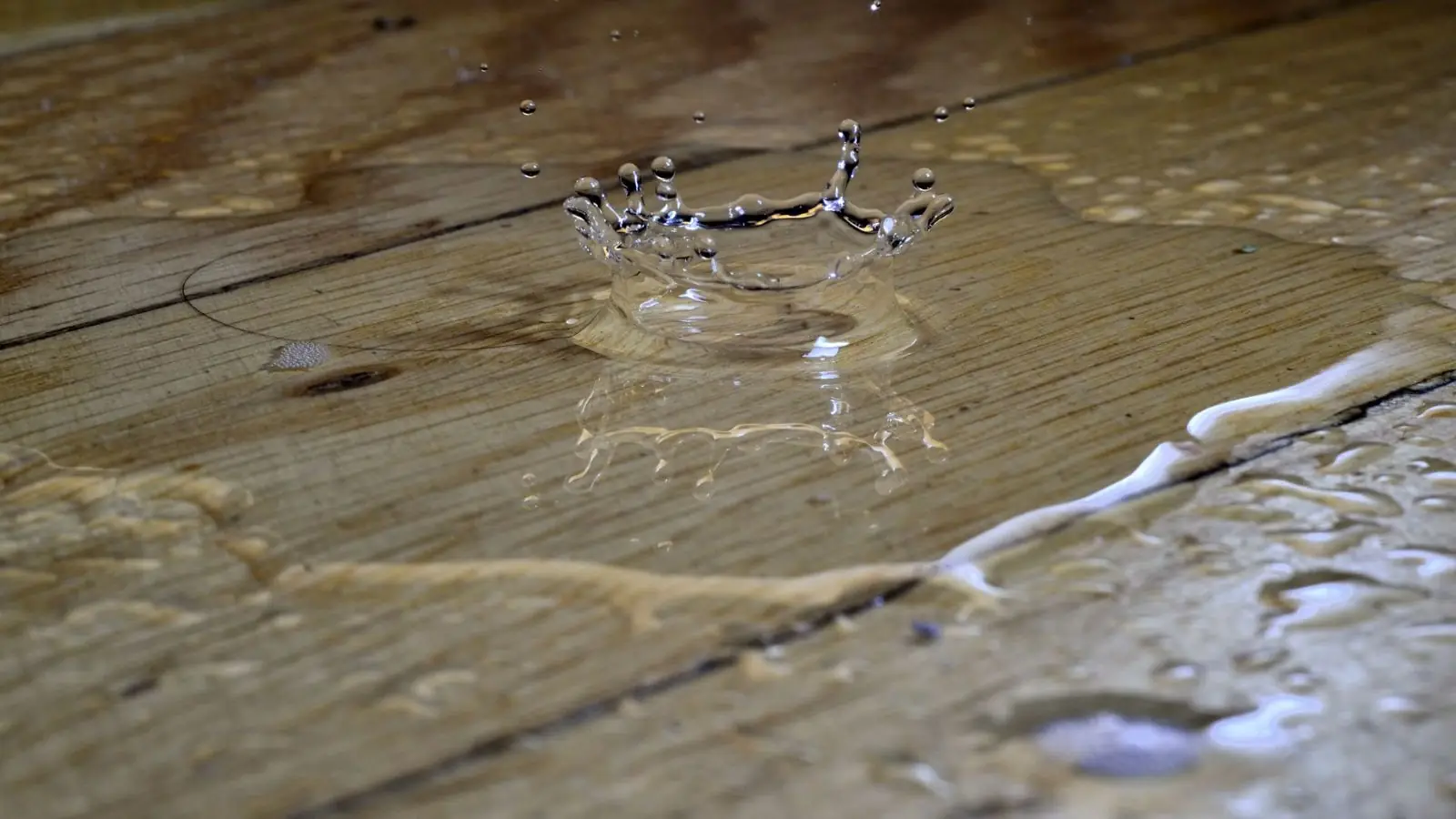
Water damage on a hardwood floor in Hopkinton, MA is the swelling and shape change that happens when wood absorbs moisture faster than it can release it. Wood is a natural sponge. It takes on water from spills, leaks and humid air, and it moves as it does. How the boards bend shows where the moisture came from and how quickly you need to act.
Cupping, crowning and buckling explained
| Shape | What you see | Usual cause | Outlook |
|---|---|---|---|
| Cupping | Board edges rise above the center, forming a shallow trough | Moisture from below, such as a damp crawl space or slab | Often flattens as the floor dries |
| Crowning | Center of the board peaks higher than the edges | Surface wet and drying unevenly, or a floor sanded while still damp | May flatten with time, may need sanding after full drying |
| Buckling | Boards lift off the subfloor in humps | Heavy, prolonged water exposure | Often needs section replacement |
| Gapping | Spaces open between boards | Wood shrinking after it dried out too fast | Usually seasonal or from over-drying |
| Staining or darkening | Black or gray marks at seams | Water sat on the finish or soaked in | Surface stain may sand out, deep stain may not |
Why wood moves
Wood fibers swell across their width when they absorb water. If the underside takes on more moisture than the top, the board cups. If the top stays wetter than the bottom, it crowns. Boards nailed tightly across a room have nowhere to expand, so the pressure gets released upward, which is how buckling starts.
None of this is instant. Cupping can appear within hours of a leak and keep developing for days. That is why the early response is about removing moisture quickly and evenly, not about repairing anything yet.
The first hours
- Stop the water. Shut off the supply line, appliance or fixture, or move a roof leak out of the room.
- Remove standing water with towels or a wet vacuum, working in the direction of the grain.
- Lift rugs, furniture legs and anything that traps water against the floor.
- Photograph the room, the water and any belongings before changing it.
- Run fans across the floor and a dehumidifier in the room, and open windows when outdoor air is dry.
Do not cover the floor with plastic or a rug while it is wet. Trapped moisture keeps the boards swollen. Avoid heat guns and space heaters aimed at the floor. Fast, uneven heat can make boards crack, split at the edges or cup the opposite way.
Days two through five: drying is controlled, not rushed
The goal is a slow, even drop in moisture, from the surface and from underneath. Professionals measure wood moisture content with a meter, compare it against a dry reference board from the same room and adjust airflow to keep the floor from drying too fast. That is the kind of work done under water mitigation.
For heavy flooding or a large wet area, emergency water removal pulls standing water out first. If water got under the boards, specialty drying mats or small holes may be used to move air through the cavity, which is hard to do well without equipment.
What not to do too early
- Do not sand the floor while it is still damp, because it locks in a crowned shape.
- Do not refinish or apply sealer until readings return to a normal range.
- Do not pull up boards unless you have been told they are beyond saving.
- Do not wax or polish over a wet finish.
- Do not assume cupping means ruin, since it can ease as the floor dries.
Wet seasons, basements and Hopkinton floors
The National Weather Service's 1991 to 2020 normals for Worcester, the regional climate station, list about 48.26 inches of precipitation in a normal year. Worcester is not Hopkinton, but the figure gives a sense of how much water the region sheds each year. In a wet stretch, damp basements and slabs below a hardwood floor can add moisture from beneath.
The practical tie-back is to check what sits under the floor. If cupping appears after rain with no visible leak, look at the basement or crawl space ceiling, the sump and grading outside before you blame the boards.
Source type: NWS 1991-2020 normals
Clean water and contaminated water are different
A broken supply line is clean water. A washing machine overflow is usually treated as gray. Floodwater from outside and sewer backup are contaminated. The state's flooding and sewage back-up guide advises assuming pathogens are present and wearing gloves, eyewear and boots. Porous items that touched contaminated water, including carpet padding, are discarded. Finished hardwood that was soaked in contaminated water needs professional judgment, not a mop.
For anything beyond a clean spill, flood damage restoration covers the safe removal and sanitizing steps that come first. Mold becomes a concern if wood stays wet for more than a day or two. The state health department says wet porous materials should be dried within 24 to 48 hours.
Check the signs that mean call a pro now
Call for professional drying if you see
- Boards lifting or humping off the floor
- Water under the boards or coming up between seams
- A musty smell or dark spotting on the wood
- More than one room affected
- Water that came from a sewer line, outdoors or an unknown source
- Floors over a finished basement ceiling below that is also wet
We cover the same hardwood problems in Ashland and Westborough, and the response steps are the same. Insurance is a separate question. Check your policy or ask your insurer, since the Division of Insurance says standard policies cover sudden and accidental damage but not flood or seepage through basement walls.
Hardwood wet or bending?
Call (508) 446-9244. Tell us where the water came from and how the boards look, and we will explain what to do in the first hours.
Frequently Asked Questions
It depends on the species, thickness and how much water got underneath. Drying can take days to several weeks. Moisture readings, not appearance, show when it is done.
Often, yes, once the moisture evens out. Do not sand early. Wait until the floor has stabilized, then judge whether it needs sanding.
Not always, but buckling usually means the boards have pulled free and some need replacing. A professional assessment of the subfloor and the nails is the only reliable answer.
Possibly. The town's zoning bylaw has a Floodplain District covering special flood hazard areas, and the Conservation Administrator is the Floodplain Administrator. Check the FEMA flood map and ask the town if your home sits near mapped areas.
No. Direct heat dries the top of the board faster than the underside and can crack or cup it. Controlled airflow and dehumidification work better.