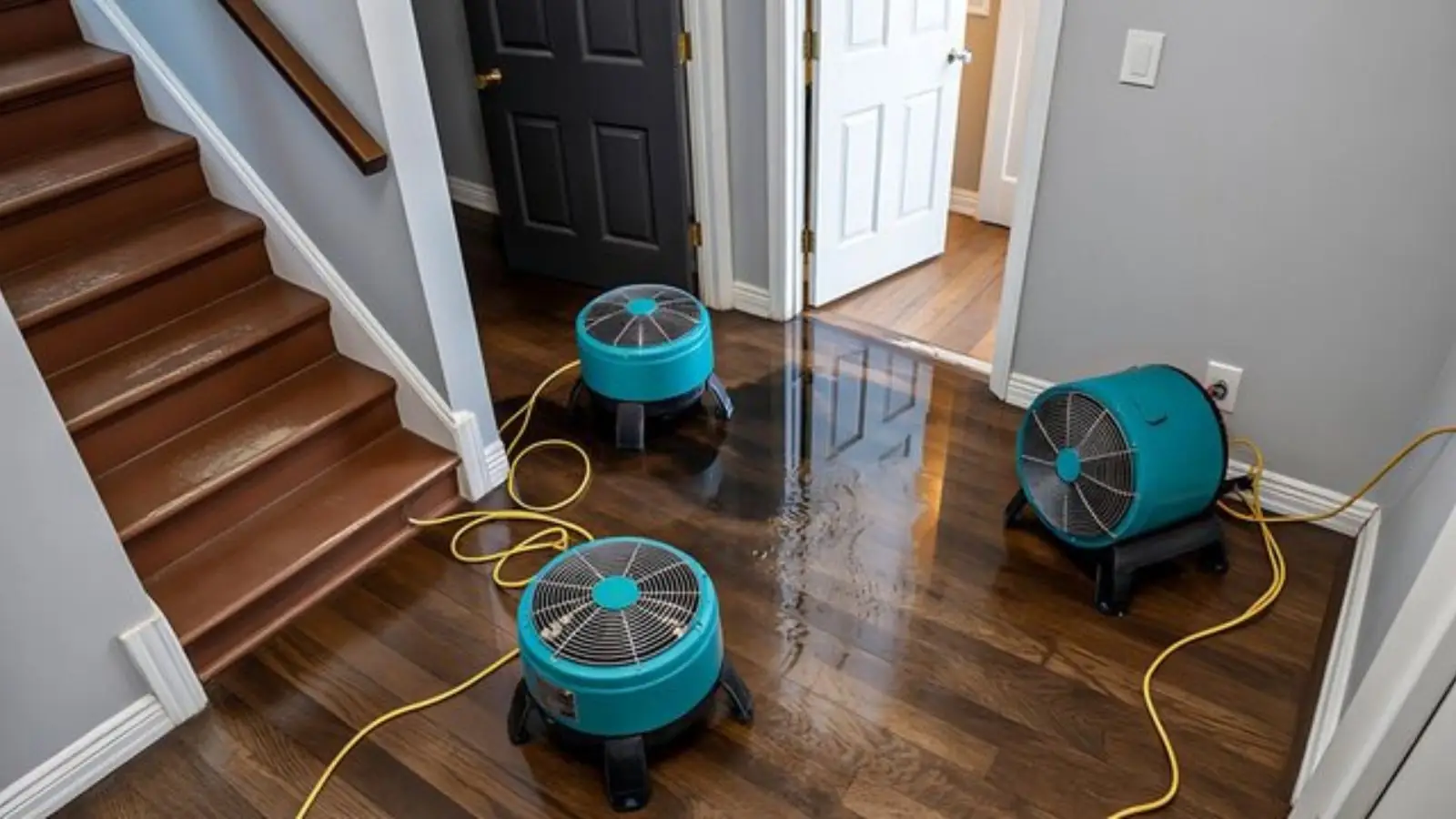
Water restoration in Hopkinton, MA is the whole process of returning a home to its pre-loss condition after water gets in. It begins with stopping the water and drying the structure, and it ends with the rebuilt room.
Restoration is the umbrella word, and the terms mitigation and repair describe two parts of it. If you have been getting quotes that use all three words, this guide sorts out what each one means and what you should expect at each stage.
Three words, three jobs
Mitigation
Limiting the damage. Water is removed, wet materials are dealt with and the structure is dried until readings are normal.
Repair
Rebuilding what could not be saved. Drywall, insulation, flooring, paint and trim go back after the structure is dry.
Restoration
The full path from the first call to the finished room, covering both mitigation and repair.
Companies sometimes use the words loosely, so ask which stages a quote covers. A price for mitigation alone will not include new drywall. A price for repair alone assumes someone else already dried the structure. Our water mitigation page covers the first part in detail.
The stages in order
- Emergency contact and safety check, including power, source and who should stay out
- Water removal, using pumps or extractors for standing water
- Inspection and moisture mapping to find hidden wet areas
- Removal of materials that cannot be saved, called demolition or tear-out
- Drying with air movers and dehumidifiers
- Cleaning and, when the water was contaminated, sanitizing
- Monitoring until moisture readings meet the drying goal
- Repair and rebuild of finished surfaces
Steps one to seven are the work people call mitigation or restoration. Step eight is repair. Skipping straight to step eight is the most common mistake, because the room looks fine while the framing behind it is still damp.
Why measuring matters more than looking
A wall can feel dry and still hold moisture. Restoration relies on instruments, not guesses. Moisture meters read materials, thermal cameras help show where water travelled and psychrometers track humidity in the air. The readings are compared with a dry reference for the same material.
Drying is finished when the numbers say so, not when the equipment has run for a set number of days. This is also why daily monitoring visits are normal. Equipment is moved, readings are logged and the plan changes as the building dries.
What ANSI/IICRC S500 is
The industry reference for this work is ANSI/IICRC S500, the published standard for professional water damage restoration. It describes the principles of drying, how water is classified by contamination and how results are documented. You can ask any company whether its crews work to it and how they confirm that drying is complete.
A standard is not a guarantee of quality. It is a shared vocabulary and a set of expected steps, so you can ask clear questions. Note that no state license specific to water damage restoration was found in the state sources we checked, so asking about training, readings and written scope matters more.
| Question | What a good answer sounds like |
|---|---|
| What will you measure? | Moisture readings in named materials, logged each visit |
| When is drying done? | When readings reach the dry goal, not after a fixed date |
| What comes out? | A written list of materials and why they are removed |
| What is not included? | A clear note that rebuilding is separate, if it is |
| Which standard do you follow? | ANSI/IICRC S500, with an explanation of how |
Where mitigation ends and repair begins
The line is the dry reading. Before it, the structure is wet, and the aim is to limit damage. After it, the aim is cosmetic and structural rebuilding. Our water damage repair page covers drywall, flooring and finishes once that line is crossed.
Sometimes the two overlap. A contractor may open a wall to dry it and then schedule insulation and drywall once the cavity passes inspection. Good communication means you always know which stage is under way and what is next.
Permits and rebuilds in Hopkinton
Hopkinton's Inspectional Services handles building, mechanical, electrical, plumbing and gas permits at Town Hall, 18 Main Street. The town page says a contractor supervisor license is not always required, but that this does not mean a permit is not required. The practical tie-back for restoration is that drying generally needs no permit conversation, while rebuilding walls or replacing plumbing and electrical parts may, so ask Inspectional Services before the repair stage starts.
Source type: Town of Hopkinton Inspectional Services page
Who does what in Massachusetts
The state requires contractors working on owner-occupied one to four unit homes to register under the Home Improvement Contractor program. Written contracts are required at $1,000 or more, and deposits are capped. Ask for the registration number, which must appear on contracts and advertising.
For structural rebuilding on one and two family homes, a licensed construction supervisor or registered design professional oversees the work. These rules apply to the rebuild, so they matter at the repair stage. If your home is in Southborough or Westborough, the Southborough service area and Westborough service area pages describe nearby coverage.
| Factor | How it changes the job |
|---|---|
| Water category | Contaminated water adds cleaning and removal |
| Materials affected | Porous materials are removed more often than hard ones |
| Time before action | Longer wet periods spread damage into more materials |
| Area | More rooms mean more equipment and more monitoring |
| Rebuild finish | Matching old trim and flooring takes extra time |
Not sure which stage you need?
Call (508) 446-9244. Describe what you see, and we explain the first step and the scope before work starts.
Frequently Asked Questions
Not exactly. Mitigation is the first part, limiting damage by removing water and drying. Restoration is the whole process and includes repair of what could not be saved.
It is the industry reference for professional water damage restoration. It covers drying principles, water classification and documentation. You can ask a company how its crews apply it.
Moisture readings in the affected materials return to the dry reference for that material. Ask to see the logged readings before any rebuild begins.
No specific water restoration license was found. Contractors doing rebuild work on owner-occupied one to four unit homes must register under the Home Improvement Contractor program.
Drying usually does not raise the question, but rebuilding can. Inspectional Services handles building, electrical, plumbing and gas permits, and the town says a permit may be needed even when a supervisor license is not.